
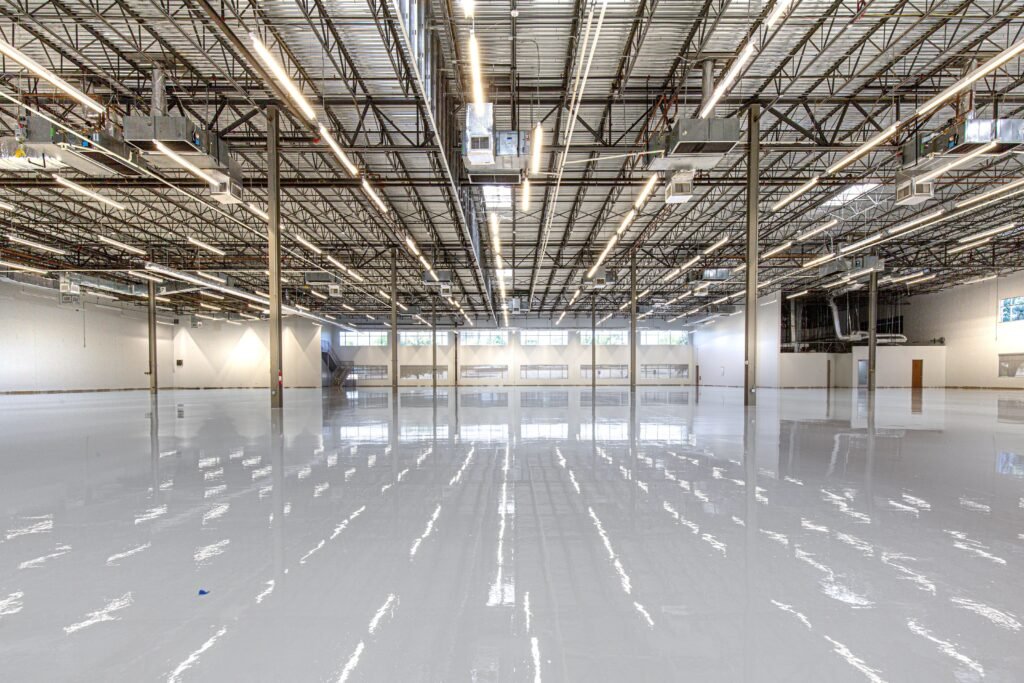
Industrial Flooring: Why It Matters for Modern Industries
Industrial flooring is much more than a concrete surface—it’s a critical component of every manufacturing facility, warehouse, food processing plant, pharmaceutical factory, logistics center, and commercial building. The right industrial flooring system enhances safety, productivity, hygiene, and operational efficiency while reducing maintenance costs and downtime. Modern industrial flooring solutions are designed to withstand heavy machinery, forklift traffic, chemical exposure, abrasion, and moisture, making them an essential investment for long-term facility performance.
What is Industrial Flooring?
Industrial flooring refers to specially engineered flooring systems designed for environments subjected to heavy mechanical loads, continuous traffic, chemicals, and demanding working conditions. Unlike ordinary concrete floors, industrial flooring provides superior strength, durability, and protection.
These flooring systems can be customized according to industry requirements, including:
Manufacturing Plants
Warehouses
Pharmaceutical Facilities
Food & Beverage Industries
Chemical Processing Plants
Textile Factories
Electronics Manufacturing
Commercial Kitchens
Automotive Industries
Logistics Centers
Cold Storage Facilities
Parking Structures
Key Features of Industrial Flooring
A professionally installed industrial floor offers numerous advantages:
Exceptional Durability
Industrial flooring is designed to withstand heavy equipment, pallet movement, forklifts, and continuous operational traffic without premature deterioration.
Chemical Resistance
Many industrial environments involve exposure to oils, acids, alkalis, solvents, and cleaning chemicals. Specialized flooring systems protect the substrate from chemical attack. (Osis Group)
Seamless Surface
Seamless flooring eliminates joints where dust, dirt, bacteria, and moisture can accumulate, making cleaning significantly easier.
Slip Resistance
Textured finishes improve worker safety by reducing slip hazards in wet or oily environments.
Dust-Free Operation
Proper industrial flooring minimizes concrete dusting, creating cleaner production areas and improving equipment performance.
Easy Maintenance
Industrial floors require minimal maintenance while maintaining an attractive appearance for years.
High Load Capacity
These flooring systems support heavy machinery, storage racks, and industrial vehicles without structural damage.
Types of Industrial Flooring Systems
Epoxy Flooring
Epoxy flooring is one of the most widely used industrial flooring solutions due to its:
High mechanical strength
Chemical resistance
Glossy appearance
Easy cleaning
Abrasion resistance
Long service life
Ideal for:
Warehouses
Manufacturing Plants
Pharmaceutical Industries
Electronics Facilities
Polyurethane (PU) Flooring
PU flooring offers greater flexibility and thermal shock resistance compared to epoxy.
Advantages include:
Temperature resistance
Comfortable underfoot
Excellent chemical resistance
Superior impact absorption
Hygienic seamless finish
Common applications include:
Food Processing Plants
Cold Storage
Beverage Industries
Dairy Plant
Concrete Hardener Flooring
Surface hardeners improve:
Wear resistance
Impact resistance
Surface density
Dust control
Perfect for:
Distribution Centers
Industrial Workshops
Heavy Manufacturing Facilities
Self-Leveling Flooring
Self-leveling systems create a perfectly smooth and flat surface suitable for:
Laboratories
Pharmaceutical Plants
Clean Rooms
Electronic Manufacturing
Benefits of Industrial Flooring
Increased Operational Efficiency
Smooth floors allow forklifts and machinery to move efficiently while reducing equipment wear.
Improved Workplace Safety
Slip-resistant surfaces reduce workplace accidents and help organizations comply with safety standards.
Lower Maintenance Costs
High-performance flooring minimizes repairs and significantly extends service life.
Better Hygiene
Seamless flooring prevents bacterial growth and simplifies sanitation, making it ideal for food and pharmaceutical industries.
Enhanced Appearance
Modern industrial floors provide a clean, professional appearance that reflects high operational standards.
Industries That Need Industrial Flooring
Industrial flooring is suitable for:
Cement Plants
Steel Industries
Food Processing Factories
Pharmaceutical Manufacturing
Chemical Industries
Garment Factories
Electronics Manufacturing
Logistics Warehouses
Distribution Centers
Automobile Industries
Printing Facilities
Commercial Buildings
Factors to Consider Before Choosing Industrial Flooring
Before selecting an industrial flooring system, evaluate:
Traffic intensity
Forklift movement
Chemical exposure
Moisture conditions
Temperature variations
Mechanical loads
Hygiene requirements
Required service life
Installation timeline
Maintenance budget
Selecting the correct flooring system depends on the operating environment rather than choosing a single material for every application.
Why Professional Installation Matters
Even premium flooring materials can fail if installed incorrectly. Proper surface preparation, moisture testing, substrate repair, and skilled application are essential for achieving maximum durability and long-term performance.
Why Choose Fairmate Construction Chemicals?
At Fairmate Construction Chemicals, we provide advanced industrial flooring solutions designed to meet the demands of modern industries. Our flooring systems combine durability, chemical resistance, abrasion resistance, and long-term performance for factories, warehouses, commercial facilities, and industrial projects across Bangladesh.
Our solutions help businesses achieve:
Long-lasting floor protection
Reduced maintenance costs
Improved workplace safety
Superior surface performance
High return on investment
Professional technical support
Whether you’re constructing a new industrial facility or renovating an existing floor, Fairmate offers reliable flooring solutions tailored to your operational needs.
Conclusion
Industrial flooring is a long-term investment that directly impacts productivity, safety, maintenance costs, and operational efficiency. Choosing the right flooring system and ensuring professional installation can significantly improve the performance and lifespan of your facility.
If you’re planning an industrial flooring project in Bangladesh, Fairmate Construction Chemicals is ready to provide durable, high-performance flooring solutions engineered for today’s demanding industrial environments.
FAQ
What is industrial flooring?
Industrial flooring is a high-performance flooring system designed for factories, warehouses, pharmaceutical plants, food industries, and other heavy-duty environments.
Which flooring is best for factories?
The best flooring depends on the application. Epoxy flooring is ideal for general manufacturing, while polyurethane flooring is recommended for food processing and areas exposed to thermal shock.
How long does industrial flooring last?
Professionally installed industrial flooring can last 10–20 years or more with proper maintenance, depending on traffic and operating conditions.
Is industrial flooring chemical resistant?
Yes. Epoxy and polyurethane flooring systems offer excellent resistance to chemicals, oils, solvents, and cleaning agents.
Can industrial flooring be installed over existing concrete?
Yes. Existing concrete floors can often be upgraded after proper surface preparation and repairs, provided the substrate is structurally sound.
Suggested Image: A high-resolution photo of a modern warehouse or factory featuring seamless epoxy or polyurethane flooring with forklifts and industrial equipment.