
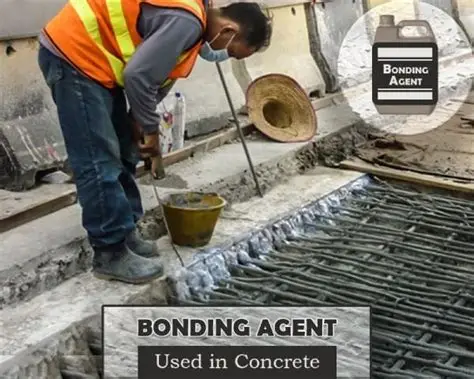
Bonding Agent: The Key to Stronger and Longer-Lasting Concrete Repairs
Focus Keyword: Bonding Agent
Secondary Keywords: Concrete Bonding Agent, Bonding Agent for Concrete, Concrete Repair, Construction Chemicals Bangladesh, SBR Bonding Agent
What is a Bonding Agent?
A bonding agent is a specialized construction chemical used to create a strong adhesion between old and new concrete, mortar, plaster, or screed. Without a bonding agent, newly applied cementitious materials often fail to bond properly with existing concrete surfaces, leading to cracks, delamination, and premature failure.
A quality bonding agent forms a durable interface that allows two concrete layers to behave as a single structural unit while improving strength, adhesion, and long-term durability. Proper surface preparation remains essential for achieving reliable performance. (theconstructor.org)
Why is a Bonding Agent Important?
During repair or renovation work, fresh mortar or concrete does not naturally adhere well to hardened concrete. This weak connection can result in:
Surface delamination
Hollow patches
Cracks
Water penetration
Reduced structural durability
Using a high-quality bonding agent significantly improves adhesion, helping repair materials remain securely attached for years. (Demo)
Benefits of Using a Bonding Agent
A premium bonding agent offers several advantages:
Excellent adhesion between old and new concrete
Higher bond strength
Reduced cracking and shrinkage
Better resistance to water penetration
Increased durability
Improved repair quality
Easy application
Suitable for both interior and exterior applications
Common Applications
Bonding agents are widely used in:
Concrete repair
Floor screeds
Wall plastering
Concrete overlays
Patch repair
Tile fixing preparation
Structural rehabilitation
Bridge repairs
Industrial flooring
Parking structures
Water tanks
Basements
Roof repair systems
Types of Bonding Agents
1. Acrylic Bonding Agent
Ideal for:
Cement plaster
Mortar
Floor repair
Decorative concrete
2. SBR Bonding Agent
SBR (Styrene Butadiene Rubber) bonding agents provide:
Excellent flexibility
Improved waterproofing
Better abrasion resistance
Superior bond strength
Commonly used for:
Waterproof plaster
Repair mortar
Floor toppings
Swimming pools
Wet areas
3. Epoxy Bonding Agent
Suitable for heavy-duty applications such as:
Structural concrete repairs
Industrial flooring
Bridge repairs
High-load areas
Epoxy systems generally provide the highest bond strength where structural performance is critical. (Chemex Industries, Inc.)
How to Apply a Bonding Agent
For best results:
Step 1: Surface Preparation
Remove dust, grease, paint and loose particles.
Repair damaged concrete if necessary.
Step 2: Clean the Surface
The substrate should be clean, sound and free from contaminants.
Step 3: Apply Bonding Agent
Use a brush or roller to apply an even coat.
Step 4: Apply Fresh Mortar or Concrete
Depending on the product specification, apply fresh mortar while the bonding coat is still tacky or according to the manufacturer’s instructions. (ScienceInsights)
Where Should You Use a Bonding Agent?
A bonding agent is recommended for:
Concrete patch repair
Wall plaster
Floor screed
Stair repair
Concrete columns
Beams
Water tanks
Retaining walls
Balconies
Parking decks
Industrial buildings
Why Choose Fairmate Bonding Solutions?
Fairmate offers advanced construction chemical solutions designed for Bangladesh’s climate and construction requirements.
With Fairmate bonding products, you can expect:
Superior adhesion
High durability
Professional repair performance
Easy application
Reliable quality
Suitable for residential, commercial and industrial construction
Whether you are repairing damaged concrete or applying fresh mortar over existing surfaces, Fairmate bonding solutions help ensure long-lasting results.
Tips for Best Performance
Always prepare the surface properly.
Do not apply over dusty or oily surfaces.
Follow the recommended mixing ratio.
Avoid application during heavy rain.
Use compatible repair mortar for optimum performance.
Frequently Asked Questions (FAQ)
What is a bonding agent used for?
A bonding agent improves adhesion between old and new concrete, mortar or plaster.
Can bonding agent prevent cracks?
It helps reduce bond failure and minimizes the risk of cracking caused by poor adhesion.
Is bonding agent waterproof?
Many SBR-based bonding agents also improve water resistance, although waterproofing performance depends on the product formulation.
Can bonding agent be used for plaster?
Yes. It is commonly used before cement plaster to improve adhesion.
Is bonding agent necessary for concrete repair?
Yes. It greatly improves repair quality and helps prevent delamination and early failure. (Demo)
Conclusion
A bonding agent is one of the most important construction chemicals for ensuring strong, durable, and long-lasting concrete repairs. Whether you are repairing a floor, wall, beam, column, or applying fresh mortar over existing concrete, using the right bonding agent significantly enhances adhesion and structural performance.
Choose high-quality bonding solutions from Fairmate Construction Chemicals Bangladesh to achieve professional repair results that stand the test of time.