
The Ultimate Guide to Engineering Grouts: Types, Uses, and Why They Are Crucial for Structural Integrity
When it comes to heavy construction, industrial setups, or structural repairs, regular cement-sand mortar often falls short. High-load conditions, heavy machinery vibrations, and narrow gaps require something much more specialized. That is where engineering grouts come into play.
If you are working on a major infrastructure project in Bangladesh or simply want to ensure your building’s foundation lasts for generations, understanding engineering grouts is essential. Let’s dive into what they are, their types, and how to choose the right one for your project.
What is an Engineering Grout?
Unlike regular tile grout used for aesthetics, an engineering grout is a high-strength, flowable material used to fill voids, transfer loads, and provide a stable base between structural elements.
Its primary job is to bridge the gap between a concrete foundation and steel components—such as machine baseplates, structural columns, or bridge bearings—ensuring that weight and vibrations are distributed evenly into the ground.
Key Features That Make Engineering Grouts Essential
Non-Shrink Properties: Standard cement shrinks as it dries, leaving tiny gaps. Advanced engineering grouts are formulated to expand slightly or remain completely stable during curing, ensuring 100% contact with the surface.
High Early Strength: They gain load-bearing strength very quickly, reducing project downtime.
Flowability: Designed to flow easily into tight, hard-to-reach spaces under heavy plates without leaving air pockets (honeycombing).
Vibration Resistance: They absorb and withstand dynamic loads from heavy industrial machinery.
Types of Engineering Grouts
Engineering grouts are generally categorized into two main types based on their chemical composition:
1. Cementitious Grouts (Cement-Based)
These are pre-packed, factory-blended powders containing high-grade cement, graded aggregates, and special chemical additives. You only need to add water at the site.
Best For: Structural column baseplates, anchor bolt grouting, pre-cast concrete panel joints, and general void filling.
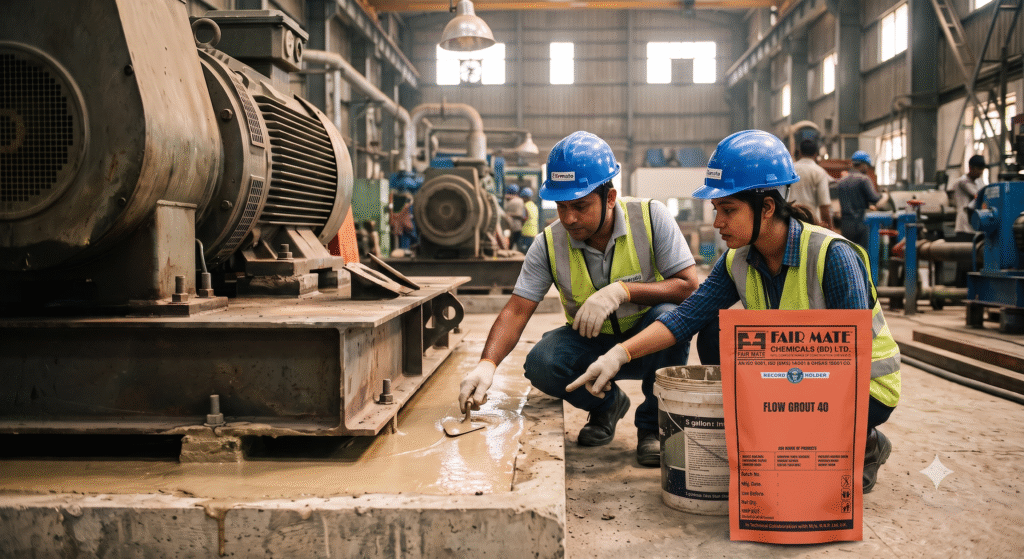
Advantages: Cost-effective, easy to mix, and highly compatible with concrete. Ready-to-use options like Flowgrout 40 provide controlled expansion and exceptional strength gain for structural under-bases.
2. Resin or Epoxy Grouts (Polymer-Based)
These consist of a two or three-part system (resin, hardener, and specially formulated aggregates).
Best For: Heavy industrial machinery bases (e.g., generators, pumps, compressors), crane rails, and environments exposed to harsh chemicals.
Advantages: Exceptionally high compressive and tensile strength, superior chemical resistance, and excellent performance under intense dynamic vibrations.
Common Applications in Modern Construction
Engineering grouts are the unsung heroes of heavy industry and infrastructure. Here is where they are most commonly deployed:
Machine Baseplate Grouting: Ensuring heavy factory equipment sits on a perfectly level, vibration-resistant foundation.
Anchor Bolt Fixing: Securing massive steel bolts into concrete walls or floors to support heavy fixtures.
Bridge Bearings: Placing high-strength grout beneath bridge girders to handle immense traffic loads.
Precast Concrete Construction: Connecting pre-fabricated concrete beams and columns safely. For heavy-duty section adjustments or severe load-bearing requirements, utilizing specialized concrete repair micro-concretes ensures zero shrinkage during the green stage.
3 Critical Tips for Applying Engineering Grouts
Even the highest quality grout will fail if applied incorrectly. Keep these site-management tips in mind:
Surface Preparation is Key: The concrete base must be clean, structurally sound, and free of oil, grease, or loose dust. For cementitious grouts, the concrete should be pre-soaked with water (saturated surface dry) to prevent it from sucking moisture out of the fresh grout.
Maintain Continuous Pouring: Always pour the grout from one side only to avoid trapping air underneath the plate. Ensure you have enough material mixed to finish the pour continuously.
Strict Curing: Just like concrete, cement-based grouts need proper curing. Keep exposed grout shoulders wet or use a high-quality curing compound to prevent premature drying and cracking.
Conclusion
Choosing the right engineering grout is not just about filling a gap; it is about protecting the structural integrity of your entire project. Investing in a specialized, non-shrink grout prevents costly structural shifts, machinery misalignment, and premature wear.
Looking for international-standard construction chemicals manufactured right here in Bangladesh? Check out the full range of high-performance construction chemicals from Fairmate designed to withstand heavy structural loads and tropical climates.